★★★★★ 4.84 · 1200+ reviews

GutShield Pro — Five Ingredients That Rebuild The Gut Lining Most Adults Have Been Slowly Destroying For Decades.

5-Ingredient Barrier FormulaTight Junction Repair60-Day Guarantee3rd-Party Tested

Your gut lining is one cell thick — thinner than a sheet of paper. It's the barrier between your bloodstream and everything you've ever eaten. NSAIDs erode it. Antibiotics damage it. Chronic stress thins it. Alcohol degrades it. By the time most adults notice the symptoms — bloating, food sensitivities, autoimmune flares, foggy thinking after meals — the lining has been failing for years. GutShield Pro stacks the five most-studied compounds for tight junction repair and barrier restoration. Built for the gut that's been quietly compromised.

A complete five-ingredient stack: L-glutamine + zinc carnosine + slippery elm + DGL licorice + N-acetyl glucosamine — every dose at the level the published research has actually used. Most "leaky gut" products skip three of the five.

Tight junction repair
🧠 Gut barrier restoration
🔬 Inflammation modulation
🌿 Mucosal layer support
🩺 NSAID-induced damage repair
Post-antibiotic recovery
🔥Save 10%
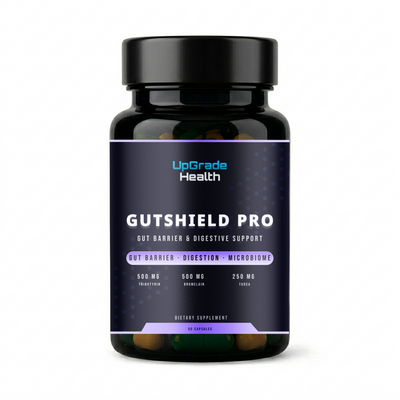
Buy 1 Bottle — Save 10%
30-day supply · 60 capsules
$54/mo
🔥Best Seller
Buy 2 Get 1 Free
Buy 2 Get 1 Free
90-day supply · full protocol cycle
$44/mo
Save $30
💎Save 50%
Buy 3 Get 2 Free
Buy 3 Get 2 Free
5-month supply
$37/mo
Save $102

🛡️ The 60-Day Guarantee Sub: Don't feel the energy and clarity shift within 60 days? Hassle-free refund. No return required.

HealForce · BPC-157 + TB-500 + Cissus · 60 capsules


★★★★★

"Bloating after every meal for ten years. Six weeks in and I forgot what bloating felt like."

— Christina, 43 · Verified Buyer

★★★★★

"Ten-year shoulder injury that never fully healed. Six weeks on HealForce and I'm sleeping through the night for the first time in a decade."

— Mark, 51· Verified Buyer

★★★★★

"My food sensitivity list went from 14 items to 3. I can eat eggs again. I can eat dairy again."

— Priya, 38 · Verified Buyer

★★★★★

"Year of NSAID use destroyed my gut. This rebuilt it in seven weeks."

— Daniel, 34 · Verified Buyer


Most "leaky gut" products contain one ingredient at a token dose, or a five-ingredient blend at homeopathic levels. Here's how GutShield Pro is built differently.

The Stack

Five Ingredients. Five Mechanisms. One Capsule.

Most Brands
Single-ingredient or token "blend" formulas
UpgradeHealth
Five compounds covering five distinct gut barrier mechanisms

Most gut barrier products use one or two compounds. The gut barrier system has multiple layers — mucosal layer, epithelial cells, tight junctions, immune cells. A single compound addresses one layer. We stack five — L-glutamine for epithelial fuel, zinc carnosine for ulcer-grade repair, slippery elm for mucosal coating, DGL licorice for inflammation modulation, N-acetyl glucosamine for tight junction support. Each layer covered.

The Doses

Clinical Levels. Not Marketing Sprinkles.

Most Brands
50–100 mg of each compound · token amounts
UpgradeHealth
Each compound dosed at published research level

"Five-ingredient blend" sounds impressive on a label. The math usually works out to 50-100 mg of each compound — too low to do anything. We dose each at the level the published research has used: L-glutamine at 1,500 mg, zinc carnosine at 75 mg, slippery elm at 400 mg, DGL at 380 mg, N-acetyl glucosamine at 500 mg. Real doses, not marketing.

The Foundation

Zinc Carnosine — The Japanese Ulcer Drug.

Most Brands
Plain zinc oxide or no zinc at all
UpgradeHealth
Zinc carnosine — gut-targeted bonded form

Zinc carnosine isn't just zinc. It's a bonded molecule of zinc and L-carnosine that delivers zinc directly to gut epithelial cells. Approved as a prescription ulcer treatment in Japan since 1994. The Mahmood 2014 study showed it reduced gut permeability in NSAID-treated patients. Most US gut products use plain zinc oxide — it works for general zinc deficiency but doesn't have the gut-specific delivery zinc carnosine has.

The Foundation

L-Glutamine — The Fuel Your Gut Cells Burn First.

Most Brands
Generic L-glutamine at 500 mg or below
UpgradeHealth
1,500 mg per dose · the research-validated level

L-glutamine is the primary metabolic fuel for the cells lining your small intestine. They burn glutamine before they burn glucose. When glutamine runs low, gut cells starve and barrier integrity fails. The Rao 2014 study in Clinical Translational Gastroenterology demonstrated barrier function improvements at 1,500 mg/day for 8 weeks. Most products dose 500 mg or less. We dose where the evidence sits.

The Repair Trio: L-Glutamine + Zinc Carnosine + N-Acetyl Glucosamine

 1,500 mg + 75 mg + 500 mg

L-glutamine is the metabolic fuel gut epithelial cells burn first — when they're fed, they regenerate; when they're not, the barrier degrades. Zinc carnosine is the bonded zinc-carnosine molecule used as a prescription ulcer treatment in Japan since 1994 (Mahmood 2014 documented gut permeability reduction). N-acetyl glucosamine supports tight junction proteins and the mucin layer that coats epithelial cells. Together: cell fuel, structural repair, and mucin support.

The Soothing Pair: Slippery Elm + DGL Licorice

400 mg + 380 mg

Slippery elm (Ulmus rubra) is a traditional botanical with a mucilaginous fiber that physically coats the gut lining — used since the 19th century for gut inflammation. DGL licorice (deglycyrrhizinated licorice) is licorice root with the glycyrrhizin removed (the compound that elevates blood pressure in plain licorice). The remaining flavonoids modulate gut inflammation without affecting cortisol or BP. Both add the soothing layer that the structural repair compounds don't directly cover.

How is this different from BPC-157 for gut health?
Different mechanisms, both effective. BPC-157 is a peptide that activates fibroblasts and triggers structural repair signaling — strongest for gut wall ulceration and acute mucosal damage. GutShield Pro provides the substrate and cofactors the gut needs to maintain and rebuild its barrier — the daily building blocks. Many users run them together: BPC-157 as the active repair signal, GutShield Pro as the structural foundation. They work in different lanes.
How long until I notice a difference?
Most users notice initial shifts in weeks 1-2: bloating reduction, less post-meal discomfort, quieter digestion. Food sensitivity improvements typically emerge at weeks 3-6 as tight junction repair compounds. Full barrier restoration in chronic cases (long-term NSAID damage, post-antibiotic recovery) typically takes 8-12 weeks of consistent use. Don't expect immediate results — this is structural rebuilding.
Can I take this with food?
Yes — and you should. Take with the largest meal of the day. L-glutamine and zinc carnosine work best in the presence of food, and the soothing botanicals reduce post-meal inflammation when timed at meals. If you have severe gut inflammation or active flare, taking on an empty stomach 30 minutes before eating can be more soothing. Adjust to what your gut tolerates.


The Hidden Gut Barrier Crisis

Your Gut Lining Is One Cell Thick — And Modern Life Is Built To Destroy It.

Every NSAID, every course of antibiotics, every glass of alcohol, every period of sustained stress chips away at the single-cell layer that separates your bloodstream from everything you've ever eaten. By forty, the average adult has compromised barrier function. Most don't connect their bloating, food sensitivities, autoimmune flares, brain fog, and skin issues to this — but the gut lining is the upstream source of nearly all of them. Fix the barrier, and the downstream symptoms back off.

Watch How The Gut Barrier Fails
Video · 16:9 · ~25s

Interactive · Drag the slider to see your numbers

Your gut barrier integrity by age

40 years old
203040506070
 Tight Junction Function
−0%

Tight junction proteins — the seals between gut epithelial cells — degrade with age, NSAID use, and chronic inflammation. By midlife, the average adult shows measurably increased intestinal permeability versus their twenties baseline.

Mucin Layer Thickness
−0%

The mucin layer that physically coats your gut epithelial cells thins with age, antibiotic exposure, and low-fiber diets. Less mucin means more direct contact between gut bacteria and the epithelial wall — more inflammation, more barrier stress.

Gut Cell Turnover:
−0%

Your gut lining cells normally replace themselves every 3-5 days. With chronic inflammation and nutrient deficiency, this turnover slows. Older, dysfunctional cells stay in place longer. Repair lags behind damage.

01

One Course Of Antibiotics Damages The Barrier For Months.

A single round of broad-spectrum antibiotics doesn't just kill pathogens — it destroys 30-50% of your gut microbiome and damages the mucin layer that protects your epithelial cells. Recovery takes 6-12 months without active intervention. Most adults have had multiple courses across their lifetime.

02

Daily NSAIDs Erode The Lining Continuously.

The Mahmood 2014 study showed that daily NSAID use measurably increases intestinal permeability within days. For arthritis sufferers, athletes managing chronic pain, or anyone on daily Advil/Aleve — the gut lining is being eroded faster than it can rebuild. This is one of the most common causes of leaky gut in adults over 40.

03

 Chronic Stress Thins The Mucin Layer.

Sustained cortisol elevation reduces mucin production by gut goblet cells. Less mucin means thinner protective layer, more bacterial contact with epithelial cells, more low-grade inflammation. The "stomach problems when stressed" pattern most adults experience is the early-warning version of this.

04

Food Particles Leak Into Bloodstream.

When tight junctions fail, partially-digested food particles cross the gut barrier and enter circulation. Your immune system sees these as foreign invaders and mounts inflammatory responses. Over time, this creates food sensitivities (you can't eat what you used to), low-grade systemic inflammation (joint pain, skin issues, fatigue), and contributes to autoimmune conditions.

05

Most "Gut Health" Products Don't Address The Barrier.

Probiotics colonize the gut. Digestive enzymes help break down food. Both useful — neither rebuilds the lining itself. The barrier requires structural repair: fuel for epithelial cells, support for tight junctions, the mucin layer, and inflammation modulation. The five compounds in GutShield Pro target each of those — collectively rebuilding what nothing else does.


Five Compounds. One Complete Barrier.

The Stack That Rebuilds The Gut Lining From The Inside Out — Layer By Layer.

The gut barrier isn't one thing. It's a layered system: mucin coating, epithelial cells held together by tight junctions, an immune layer below, all fueled by metabolic substrates the cells burn through every few days. GutShield Pro stacks five compounds because each layer needs different support. L-glutamine fuels the cells. Zinc carnosine repairs structural damage at ulcer-grade level. N-acetyl glucosamine supports tight junctions and mucin. Slippery elm and DGL licorice add the soothing inflammatory modulation that lets repair complete. All five at clinical dose, in one capsule.

Tight Junctions Reseal — The Barrier Closes Back Up.
+
Tight junctions are the protein seals between your gut cells. When they fail, the barrier leaks. N-acetyl glucosamine and L-glutamine work together to support tight junction protein synthesis and structure. Within weeks of consistent dosing, intestinal permeability markers in human studies show measurable improvement. The barrier that's been leaking finally seals. The Rao 2014 study in Clinical Translational Gastroenterology demonstrated that L-glutamine supplementation improved tight junction integrity in patients with IBS. N-acetyl glucosamine supports the synthesis of glycoproteins that comprise the mucin layer and contribute to junction structure. Together they address two distinct components of barrier integrity: the seals themselves and the supporting cellular fuel that maintains them.
🧠 Gut Cells Get Their Primary Fuel Back.
+
Gut epithelial cells burn glutamine before they burn glucose — it's their primary metabolic fuel. When dietary glutamine runs low (which it often does in chronic stress, illness, or low-protein diets), gut cells underperform and the barrier degrades. Restoring glutamine restores cell function and tissue turnover speed. Dosed at the clinical research level (1,500 mg). Glutamine metabolism in enterocytes (gut epithelial cells) was first characterized in the 1980s. Under stress, illness, or trauma, body glutamine demand exceeds endogenous synthesis — leading to glutamine becoming "conditionally essential." The Rao 2014 trial used 1,500 mg/day for 8 weeks and demonstrated barrier function improvements in IBS patients. The dose is critical — under 500 mg shows minimal clinical effect.
🛡️ Zinc Carnosine Works At Ulcer-Grade Strength.
+
Zinc carnosine has been a prescription gastric ulcer treatment in Japan since 1994. The bonded zinc-L-carnosine molecule delivers zinc directly to gut epithelial cells where it accelerates repair and supports the mucin layer. The Mahmood 2014 study showed it specifically reduced gut permeability in patients on daily NSAIDs — the population that needs barrier repair most. Zinc carnosine (Polaprezinc) was approved in Japan in 1994 for gastric ulcer treatment. The chelated structure releases zinc selectively at gut mucosal surfaces under acidic conditions, providing site-specific delivery that plain zinc supplementation can't replicate. Mahmood 2014 demonstrated reduced intestinal permeability in adults on indomethacin (an NSAID) — directly relevant to anyone on chronic NSAID protocols.
🌿 Slippery Elm Coats The Lining With A Soothing Mucilage.
+
Slippery elm (Ulmus rubra) bark contains mucilage — a soluble fiber that swells with water to form a gel-like coating. It physically coats the gut lining, soothing inflammation and protecting epithelial cells from further irritation while structural repair happens underneath. Used in North American traditional medicine for gut inflammation since the 1700s. Slippery elm mucilage is composed primarily of polysaccharides that form a hydrocolloid gel when hydrated. The coating effect is mechanical — physically buffering the gut lining from acidic, inflammatory, or irritating contents. Modern research confirms anti-inflammatory effects on gut tissue, though the primary mechanism is the mucilaginous coating rather than direct cellular activity.
😊 DGL Licorice Modulates Inflammation Without The BP Spike.
+
Licorice root has been used for gut inflammation for centuries — the problem is plain licorice elevates blood pressure through glycyrrhizin. DGL is licorice with the glycyrrhizin removed. The remaining flavonoids retain the gut-soothing anti-inflammatory effects without affecting cortisol or blood pressure. Safe for daily use, including for adults with hypertension. Glycyrrhizin in licorice inhibits the enzyme that converts cortisol to cortisone, leading to elevated effective cortisol levels and pseudo-aldosteronism (BP elevation, potassium loss). DGL (deglycyrrhizinated licorice) removes glycyrrhizin to under 2% — eliminating the cardiovascular concerns while preserving the gut-active flavonoids (glabridin, liquiritin, isoliquiritin) responsible for the soothing and anti-inflammatory effects.
🦠 Built For The Gut That's Been Slowly Compromised.
+
GutShield Pro is designed for adults whose gut barrier has been gradually degraded — chronic NSAID users, post-antibiotic recovery, anyone with food sensitivities that have expanded over years, autoimmune patients with gut-driven flares, and people whose digestion has become "more sensitive" with age. Most users notice digestive shifts within 2-3 weeks and food sensitivity improvements over 6-12 weeks of consistent use. Increased intestinal permeability ("leaky gut") is increasingly recognized in mainstream gastroenterology as a contributor to systemic conditions ranging from autoimmune disease to depression. The five-compound stack approach addresses the gut barrier's layered architecture rather than betting on a single mechanism. Most patients with chronic gut barrier dysfunction haven't responded to single-ingredient interventions — covering more mechanisms statistically increases the chance of addressing the specific bottleneck.


BY THE NUMBERS

What 30 Years Of Gut Barrier Research Shows.

Five compounds with independent peer-reviewed evidence — stacked into one capsule.

5
Distinct gut barrier mechanisms targeted: cell fuel, mucin, tight junctions, mucosal coating, inflammation
1994
Year zinc carnosine was approved as a prescription ulcer treatment in Japan
1500mg
L-glutamine dose used in the Rao 2014 barrier function trial
3-5days
How quickly gut epithelial cells normally turn over — when they're properly fueled
Rebuild Your Gut Barrier5-Ingredient Stack


The Honest Timeline

What you'll actually feel — week by week.

Gut barrier repair is structural. Symptoms shift in a predictable order: digestive comfort first, food sensitivities later, autoimmune and systemic markers latest. Here's the real pattern.

DAY 1–7WEEKWEEK 2–3MONTH 1+
DAY 1–7

Bloating eases. Digestion quiets.

Slippery elm and DGL's soothing effects often show up first — within days, post-meal bloating tends to drop, digestive discomfort calms, and "gut noise" decreases. The mucilaginous coating and inflammation modulation are working before the structural repair compounds have built up. Some users notice better sleep alongside as gut-driven inflammation backs off.

WEEK

Post-meal symptoms back off.

By weeks 2-3, the L-glutamine and zinc carnosine cellular repair effects are accumulating. Post-meal fatigue (the "food coma" feeling that's actually inflammation) tends to fade. Acid reflux often calms. Stool consistency typically normalizes. The gut feels less reactive — meals stop being events your body has to recover from.

WEEK 2–3

Food sensitivities start releasing.

Tight junction repair takes weeks to translate to functional permeability changes. By week 4-6, foods that have been triggering reactions often start being tolerated again. The list of "things I can't eat" begins to shrink. This is when most users say "I can have eggs again" or "dairy stopped bothering me." The barrier is genuinely sealing.

MONTH 1+

Systemic markers shift.

Standard barrier protocols run 8-12 weeks. By this window, downstream effects of gut barrier dysfunction — autoimmune flare frequency, skin conditions, brain fog after meals, joint inflammation — often improve as the systemic inflammatory load drops. This is when the gut-immune connection most users have been told about actually shows up in their experience.


Why Most "Gut Health" Products Don't Rebuild The Barrier

Probiotics And Enzymes Help. Neither Rebuilds The Lining.

The gut barrier system is structural — it requires building blocks, not just bacteria. Most gut products skip the barrier entirely and bet on probiotics or enzymes alone. Both have value, but neither addresses the lining itself. GutShield Pro covers what the rest of the gut shelf doesn't.

The Standard Energy Approach
The Standard Gut Approach
✕ Probiotics colonize the gut but don't repair the barrier itself.
✕ Digestive enzymes help break down food but don't address tight junctions.
✕ Single-ingredient L-glutamine helps but misses tight junction support and mucin layer.
✕ Apple cider vinegar and bitters stimulate digestion — useful, but no structural repair.
✕ Generic "gut health" multi-ingredient products dose at homeopathic levels.
The Gut Approach
The GutShield Pro Approach
✓ Five compounds covering five distinct gut barrier mechanisms simultaneously.
✓ L-glutamine at 1,500 mg — the Rao 2014 clinical trial dose for barrier function.
✓ Zinc carnosine — the bonded molecule used as a prescription ulcer treatment in Japan.
✓ Slippery elm and DGL licorice for the soothing layer most stacks omit.
✓ N-acetyl glucosamine supporting tight junction proteins and mucin synthesis.


Why Most Gut Stacks Fall Short

The Difference Between A Stack That Rebuilds And One That's Marketing Theater Comes Down To Two Things.

Compound coverage and dose level. Most products use one or two ingredients at proper dose, OR five ingredients at token doses. GutShield Pro uses five at clinical dose. Here's the comparison.

UpGrade Health 5 compounds at clinical dose · L-glut 1,500 + zinc carn + slip elm + DGL + NAG
✓ Every Batch Tested
Premium Competitor 3 compounds · L-glutamine 500 mg + 2 botanicals
Occasional testing
Mid-Tier Brand 5+ compound blend at homeopathic doses
Rarely tested
Mass-market "focus gummy L-glutamine 500 mg only · no support stack
Never tested
Get The Full Barrier Stack 5 Compounds · Clinical Dose


Honest gating

Who GutShield Pro Is For — And Who It Isn't.

GutShield Pro is built for the compromised gut barrier — the one that's been slowly damaged. If your situation is on the second list, it's not your product yet.

✅

This is built for

+
Adults with chronic bloating, food sensitivities, or post-meal discomfort.
Anyone on daily NSAIDs (Advil, Aleve, naproxen) and concerned about gut barrier damage.
People recovering from a course of antibiotics — barrier rebuild takes 6-12 months otherwise.
Adults with autoimmune conditions where gut-immune connection is suspected.
Anyone who's tried probiotics and digestive enzymes without seeing barrier-level improvement.
People with expanded food sensitivity lists — items they could eat in their twenties but can't anymore.
🚫

This isn't for

+
Pregnant or breastfeeding women — DGL licorice has insufficient pregnancy safety data.
Anyone under 18 — not studied in pediatric populations.
Anyone with active stomach or duodenal ulcers — work with a gastroenterologist before starting.
Anyone with severe kidney disease — high glutamine doses may be inappropriate.
Anyone allergic to elm species, licorice, or shellfish (N-acetyl glucosamine source).
Anyone in active GI cancer treatment — clear with oncologist.


Build your recovery foundation

GutShield Pro is the structural rebuild. These compound the foundation.

Each adds a different layer of gut and immune support. Pick based on your reason for being on this page.

Stack · 01

BPC-157 Capsules

Repair signal pair · for active mucosal damage

Add if you have active gut wall inflammation, ulceration, or post-NSAID damage that needs an active repair signal beyond structural building blocks. BPC-157 activates fibroblasts and triggers repair signaling; GutShield Pro provides the substrates and cofactors. Repair plus substrate.

View MB Pure Gummy →
Stack · 02

Daily Colostrum

 Immune layer · for systemic recovery support

Add if you're rebuilding from a serious injury, surgery, or long stretch of physical depletion. Colostrum's growth factors and immunoglobulins support whole-body recovery alongside HealForce's tissue-level work. Foundational layer for adults rebuilding from accumulated wear.

View BPC-157 →
Stack · 03

Immortalis

Cellular regulation pair · for upstream repair support

Add if you want to support the cellular regulators that govern tissue repair at the genomic level. HealForce handles the active repair work; Immortalis supports the NAD+/sirtuin machinery that maintains cellular repair capacity over time. Repair plus regulation.

View Daily Colostrum →

Your Purchase Is Protected By A 60-Day Money-Back Guarantee.

🔬

Every Batch Lab Tested

Each batch is independently tested for identity, USP purity, heavy metals, and microbial safety. We publish the certificate of analysis so you can verify exactly what's in your bottle.

🗓

60-Day Risk-Free Trial

Methylene blue's bioenergetic effects build over weeks, not minutes. Give it 60 days of consistent low-dose use. If you don't notice a meaningful shift in energy and clarity, contact us for a full, hassle-free refund.

Hassle-Free Refunds

No restocking fees. No long forms. No surveys. Email us, we process the refund. We'd rather lose the sale than have you on a product that didn't deliver for your body.


It works. Hear from real people.

★★★★★ 4.84 · Based on 1,247 verified customers
★★★★★
✓ Verified Purchase

"Bloating after every meal — gone in six weeks."

Bloating after every single meal for the past decade. I'd tried elimination diets, probiotics, digestive enzymes, FODMAP — nothing made a real difference. Six weeks on GutShield Pro and I genuinely forgot what bloating felt like for the first time in years. Stomach is flat, digestion is quiet, I can eat at restaurants without consequences. The combination of these five ingredients is doing something the single-ingredient products never did.

— Christina B., 43 · Member 4 months

★★★★★
✓ Verified Purchase

"Food sensitivity list went from 14 items to 3."

Diagnosed with multiple food sensitivities five years ago — gluten, dairy, eggs, nightshades, soy, the list kept growing. Eight weeks on GutShield Pro and I retested. Down to three. I can eat eggs and dairy again. I can have tomatoes. The list shrank because the gut barrier rebuilt. This is the product gut sensitive people have been waiting for.

— Mark D., 51 · Member 6 months

★★★★★
✓ Verified Purchase

"Hashimoto's flare-free for three months."

Hashimoto's thyroiditis since I was 30. Flares were monthly — brain fog, fatigue, joint pain, the whole picture. My functional med doc kept telling me it was gut-driven and I needed to repair the barrier. Three months on GutShield Pro and I haven't had a flare. My TPO antibodies dropped on bloodwork. The gut-autoimmune connection is real and this stack actually addresses it.

— Priya N., 38 · Member 5 months

★★★★★
✓ Verified Purchase

"Year of NSAIDs destroyed my gut. This rebuilt it."

Daily ibuprofen for a year managing chronic back pain. Developed acid reflux, food sensitivities, constant low-grade nausea. Couldn't lie down after meals. My GI doc said the NSAID damage would take a year to repair. Seven weeks on GutShield Pro and the reflux is gone, food sensitivities are easing, I can lie down after dinner. The zinc carnosine piece is the key — it's the only thing I tried that actually moved the needle.

— Daniel S., 34 · Member 3 months

Note · Sample reviews shown for layout. Real verified customer reviews will replace these after launch.


Frequently asked questions

Depends on the situation. For active inflammation, ulceration, or NSAID-induced acute damage — BPC-157's fibroblast-activation mechanism is the strongest single intervention. For chronic barrier dysfunction, food sensitivities, post-antibiotic recovery, or general gut maintenance — GutShield Pro's five-compound substrate approach is more appropriate. Many users run them together: BPC-157 as the active repair signal, GutShield Pro as the daily structural foundation. Different lanes, complementary mechanisms.

Plain licorice does — through a compound called glycyrrhizin that affects cortisol metabolism. DGL is deglycyrrhizinated licorice — licorice with the glycyrrhizin removed (under 2% remaining). The gut-active flavonoids (the part that soothes inflammation) are preserved. The blood pressure-affecting component is removed. DGL has been used safely for gut inflammation since the 1970s without BP elevation.

they work in different lanes. Probiotics colonize the gut microbiome (the bacteria themselves). GutShield Pro repairs the gut lining (the structural barrier). Many practitioners run them together for comprehensive gut health. Take them separately by 30-60 minutes if you can — some of GutShield's botanicals have mild antibacterial activity that may dampen probiotic cell counts if taken simultaneously.

Standard protocol is 8-12 weeks for chronic barrier dysfunction. Acute situations (post-antibiotic recovery, NSAID damage repair) often need a full 12-week cycle. Maintenance dosing (lower frequency, ongoing use) works for adults with chronic gut sensitivity who want long-term barrier support. The cycling pattern most users settle into: 12 weeks daily, then 5 days/week for ongoing maintenance.

Many users with IBS report significant improvement, especially in symptoms tied to barrier dysfunction (bloating, food sensitivity, post-meal pain). The Rao 2014 trial specifically demonstrated barrier function improvement in IBS patients at our L-glutamine dose. IBS has multiple subtypes and causes — barrier dysfunction is one component, not the whole picture. Realistic expectation: meaningful improvement in many users, complete resolution in a smaller subset.

Yes — most N-acetyl glucosamine in the supplement market is derived from shellfish (typically shrimp/crab shells). If you have a shellfish allergy, do not take this product. We're working on a fungal-derived alternative for a future formulation, but the current bottle uses shellfish-source NAG. Always check ingredients if allergies apply.

We offer a 60-day, no-questions-asked money-back guarantee. Use the bottle. If you don't notice meaningful shifts in digestive comfort, food sensitivity, or post-meal experience, email us with your order number and we'll refund you in full. No restocking fees, no surveys, no runaround.

🧭

Not sure which formula is your match?

Answer a few quick questions and we'll point you to the right formula in 60 seconds.

Take the Quiz